44. Certification & Career Pathways
Learning objectives
- Map the credential and trade pathways into and up the field.
- Understand wages and advancement.
44.1 The credential ladder
The North American standard is the NABCEP progression (detailed in the companion curriculum): PV Associate (PVA) entry credential, then PV Installation Professional (PVIP) gold standard, then specialties (PV Design Specialist, PV Technical Sales, PV System Inspector, Energy Storage/ESIP), and finally advanced commercial/utility and business roles. The parallel electrician pathway (apprentice → journeyman → master) is the other major route in. An electrical license is often decisive for going independent. See Appendix F for the full career curriculum mapping these credentials to course sequences.
44.2 Wages and advancement
Per the US BLS, the median solar PV installer wage was about $51,860/year (≈$23–24/hr, May 2024) (comparable to roofers and construction laborers), with entry around $52k and experienced installers $55–70k+, more for leads and certified specialists; high-cost states (California) and certain markets pay premiums. The BLS projects solar PV installation among the fastest-growing occupations (projected +42% over 2024–34, BLS OOH). Advancement runs installer → lead → site supervisor → project manager → design/sales → owner.
⚠️ Note that IRA-era prevailing-wage and apprenticeship requirements attach to larger (>1 MWac) projects seeking full incentives.
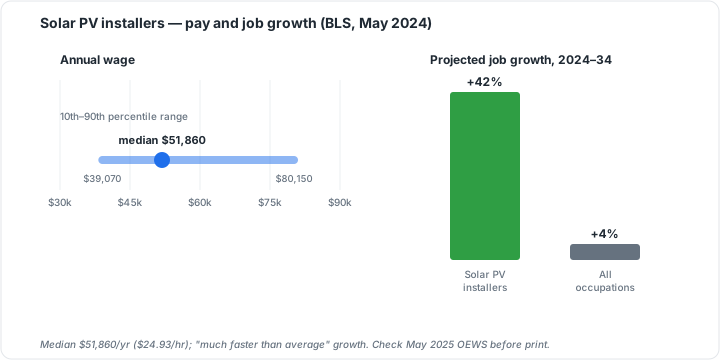 Figure 44.1: Solar PV installers: pay and projected job growth (BLS, May 2024). Original figure.
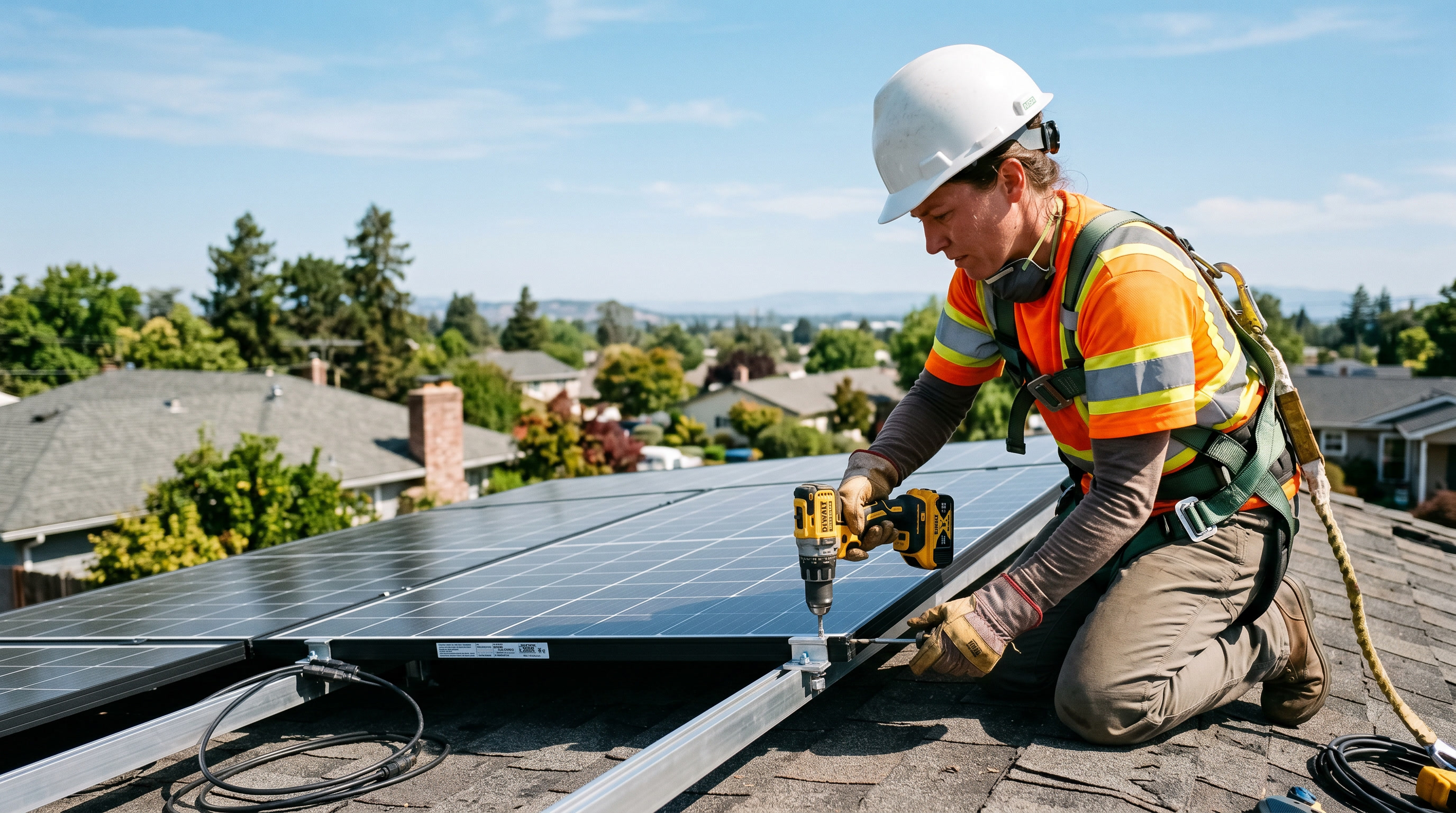 Figure 44.2: Solar PV installation is hands-on rooftop field work. Original generated photo.
44.3 The career and credential ladder
 ENTRY ──────────► PROFESSIONAL ───────► SPECIALIZE ──────► ADVANCE
 NABCEP PVA        NABCEP PVIP           PVDS / PVTS /       commercial/utility
 (or 6 mo exp)     (58 hr + OSHA 10      PVSI / ESIP         lead → site super →
   +                + 6 projects)                            PM → design/sales →
 electrician                                                 OWNER / master trainer
 apprentice → journeyman → master (parallel trade route, key for going independent)

 WAGES (US BLS, ~2024 median ≈ $51,860): entry ~$52k → experienced $55–70k+ →
        leads/specialists higher; fastest-growing occupation band
 ⚠️ projects > 1 MWac may carry prevailing-wage / apprenticeship requirements
Chapter 44 summary
Enter via the NABCEP ladder (PVA → PVIP → specialties) and/or the electrician trade. The BLS median is ~$51,860 with strong projected growth and clear advancement to lead, PM, design/sales, and ownership. Larger projects carry prevailing-wage/apprenticeship strings.
- NABCEP (North American Board of Certified Energy Practitioners): the industry’s primary credentialing body; its certifications are the recognized competency benchmark.
- PVA (PV Associate): the entry-level NABCEP credential for new installers.
- PVIP (PV Installation Professional): the gold-standard professional NABCEP certification (58 hours + OSHA 10 + 6 projects required).
- Electrician pathway: apprentice → journeyman → master trade route; often required for permit-pulling and independent contracting.
- Prevailing wage: federally set minimum wage rate for a trade; required on projects >1 MWac seeking full IRA incentives.
- BLS OOH (Bureau of Labor Statistics Occupational Outlook Handbook): source for official wage data and growth projections cited in this chapter.
Full definitions: Appendix A (glossary).
Practice Problems: Chapter 44
- What is the entry NABCEP credential, and what is the “gold standard” professional one?
- Name two NABCEP specialty credentials.
- Roughly what was the BLS median wage for solar PV installers (2024)?
- Why is the electrician trade route especially valuable if you want to go independent?
- What kind of projects trigger prevailing-wage/apprenticeship requirements?
Solutions: Chapter 44
- Entry: PV Associate (PVA); gold standard: PV Installation Professional (PVIP).
- Any two of: PV Design Specialist, PV Technical Sales, PV System Inspector, Energy Storage (ESIP).
- About $51,860/year (~$23–24/hr).
- An electrical license is often required to pull permits and operate as an independent contractor.
- Larger projects, generally > 1 MWac, seeking full incentives.